
A pre-drywall inspection is a small window of opportunity that closes permanently the day the drywall goes up. Once those walls are sheathed and finished, the framing, plumbing rough-in, electrical rough-in, HVAC ducting, and structural connections become invisible. Any defects in that work get sealed inside the house. Some will surface within months as visible problems. Others will quietly cause issues for years before anyone figures out what is wrong. A pre-drywall inspection catches them while everything is still exposed and easy to fix.
This is the inspection nobody knew they needed until they saw what gets caught. Robert spent 30 years in residential construction before becoming a TREC-licensed inspector. That experience is exactly what a pre-drywall inspection requires. There is no checklist substitute for someone who knows what proper framing, proper rough-in, and proper structural connections actually look like.
The point of this inspection is to evaluate everything that will soon be hidden behind drywall, insulation, and finish work. We are looking at framing for proper nailing patterns, missing fasteners, cuts and notches that have weakened structural members, and beams or headers that were sized incorrectly for the load. We check the roof structure, including truss bracing and connection points. On the plumbing side, we look at the rough-in for proper venting, sloping, support, and connections that were not glued or torqued correctly. Electrical rough-in gets checked for boxes that are not secured, wires that are not properly stapled or protected, and circuits that have been run incorrectly through structural members.
We also check insulation prep, exterior sheathing and weather barriers, window and door installation, and the HVAC ducting before it gets buried in walls or above ceilings. Air sealing details, which determine how energy efficient the home will actually be, are inspected at this stage. Once the drywall goes up, none of this can be evaluated without invasive demolition.
The pre-drywall inspection happens after the rough-in trades are complete (framing, plumbing, electrical, HVAC) but before the drywall hangers show up. Your builder’s superintendent can usually tell you when this window opens. In North Texas production builds in Anna, Melissa, and the surrounding suburbs, this stage typically lasts 3 to 7 days, so do not wait too long once you get the heads-up. We recommend telling your builder at contract signing that you intend to bring an independent inspector at this stage. Most builders are accommodating, though some require advance scheduling and will not delay the build for an inspection.
For maximum protection on a new build, we recommend pairing this with a final new construction inspection before closing and an 11-month warranty inspection before your builder warranty expires. All three are available together as the New Build Bundle at a reduced rate.
A pre-drywall inspection is $325 for homes up to 1,499 square feet, with $25 added per additional 500 square feet. The inspection typically takes 2 to 3 hours depending on the size and complexity of the home. You will receive a detailed Spectora report within 24 hours, with photos of every concern documented in context, so you can show the builder exactly what needs to be addressed before drywall installation begins.
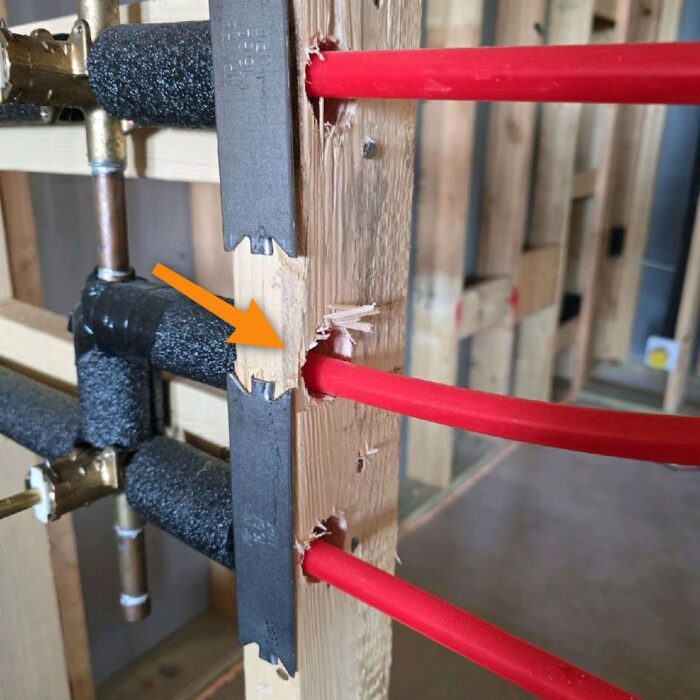
A pre-drywall inspection is different from a standard home inspection in scope and focus. With the home opened up, Robert evaluates the framing, plumbing rough-in, electrical rough-in, HVAC ducting, structural connections, sheathing, weather barriers, and insulation prep. The work being inspected is the work that will soon be invisible, so the photos in your report are often the only documentation of what is actually behind your walls.
Most pre-drywall inspections take 2 to 3 hours. You are welcome to come along, and many homeowners do. Within 24 hours you will receive a complete Spectora report with photos and explanations, ready to bring to your builder while the rough-in is still accessible.